There's a churn signal hidden in your data. Here's how to find it—and act on it.
•
5 minute read

Key takeaways
- The earliest churn signal isn't missing—it's just sitting in a system your revenue team never sees.
- A quiet account can be riskier than a vocal one. Passive sentiment paired with support silence was the strongest signal Walker found.
Retention improves fastest when experience data reaches revenue teams before the next report cycle, not after.
By the time anyone flags an account as at-risk, the customer has already decided to leave.
Most retention teams build their early-warning systems out of what's easiest to reach: usage data, support tickets, contract terms. All structured. All sitting in a CRM somewhere. But the earliest signal is almost never there. It's a passive NPS score. A quiet account. A customer who stopped calling support—not because everything's fine, but because they've stopped trying.
That signal lives in a different system—owned by a different team, run on a different reporting cadence. By the time it reaches the people managing revenue risk, it's stale or it never arrives at all.
The fix isn't a better churn model. It's getting experience data into the same place as the operational and behavioral data revenue teams already act on.
What Walker tested.
Walker worked with a global B2B software company that builds product lifecycle management software for manufacturing and industrial customers. As the company has shifted toward more subscription-based revenue, its growth strategy has shifted, too. Growth is now built on Annual Recurring Revenue (ARR)—renewing and expanding the subscriptions it already has.
It doesn't just want to win new customers. It needs to keep the ones it has.
As part of an ongoing Unified XM partnership, Walker proposed a tightly scoped test: connect experience, operational and behavioral data. Then see how much ealier the combination could surface churn risk.
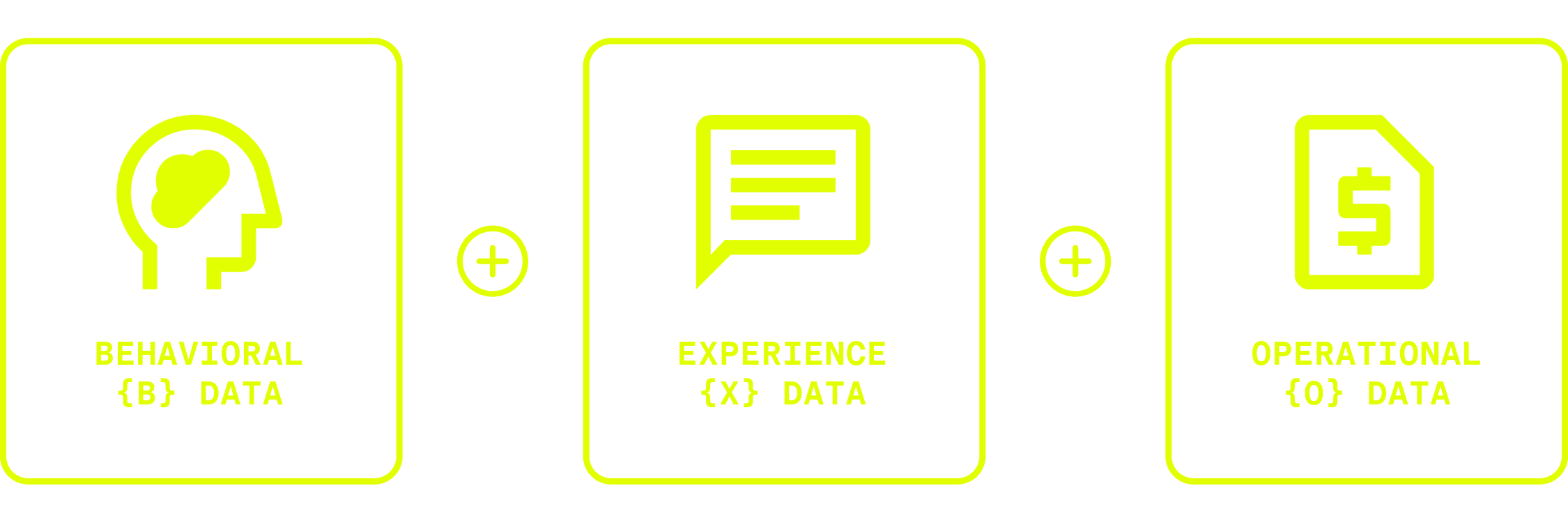
Walker unified three data types that had never lived in one place before:
- Experience data—Customer sentiment, unstructured text anlysis.
- Operational data—support engagement, time-to-resolution, CRM records.
- Behavioral data—product usage and engagement patterns.
One finding stood out. Among accounts with passive sentiment, those with no Technical Support engagement in the last 90 days were 4x more likely to show declining ARR. Sentiment alone didn't predict that risk. Support engagement alone didn't either. Together, they did.
The path: acting on the signal, not just measuring it.
Walker designed Churn Signal Detection to put the earliest signal possible in front of the teams that can act on it. Before the account is gone. No waiting for a quarterly report or support ticket to surface risk. Just a flagged account—and enough lead time to prevent the churn.
Surfacing the signal took real work. The team pulled 24 months of history from 13 different systems, then worked through the unglamorous part: account IDs that didn't match, ARR figures that didn't reconcile between systems. What started as more than 400 data fields narrowed to 93 —the ones that actually mattered.
The end goal—a system that spots risk and responds automatically—takes more work. So Walker laid out a path to get there. Three phases—each adding a new capability on top of the last, scoped to how much automation a team is ready to take on today.
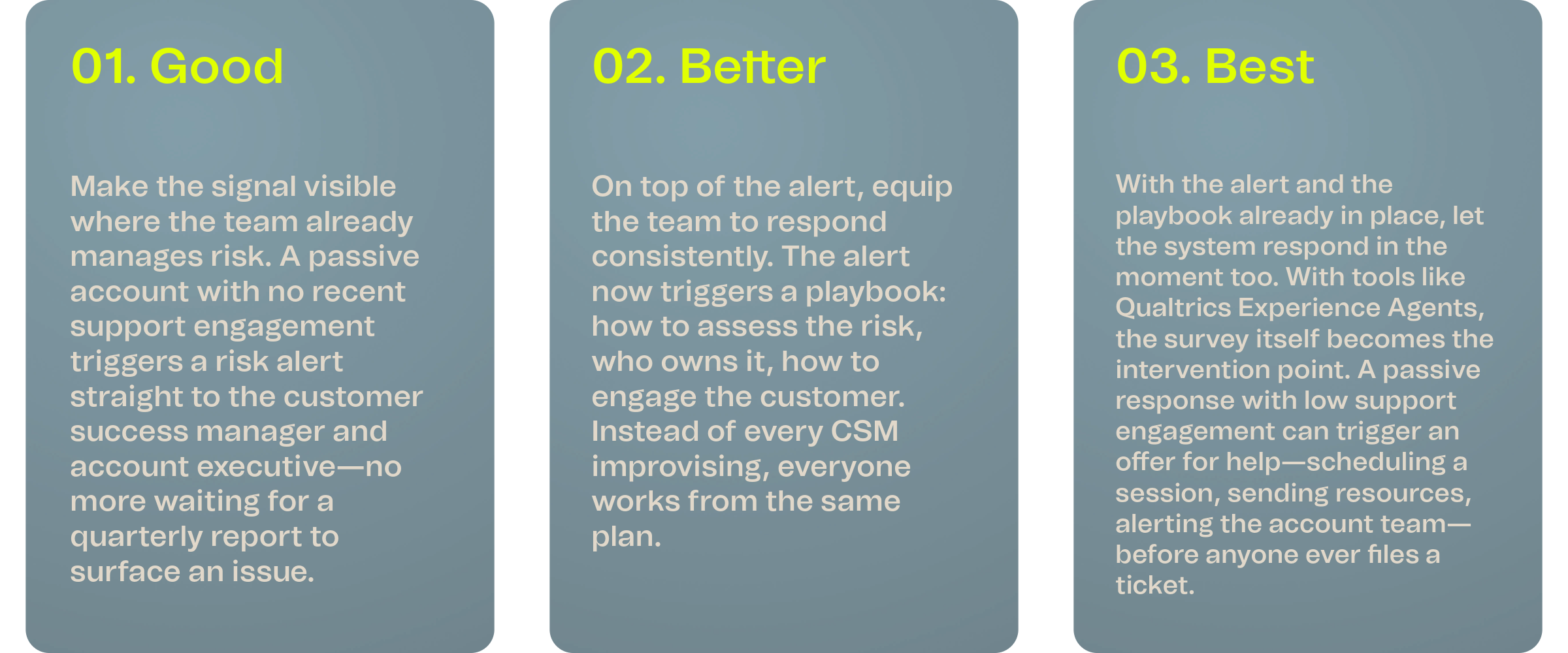
None of these require a team to have the most advanced setup on day one. They require knowing where an account stands today, and building toward where a team wants to be.
The same theme unites all three stages: the earlier the signal reaches the right team, the more likely the account stays. And the more likely ARR does, too.
Where this fits.
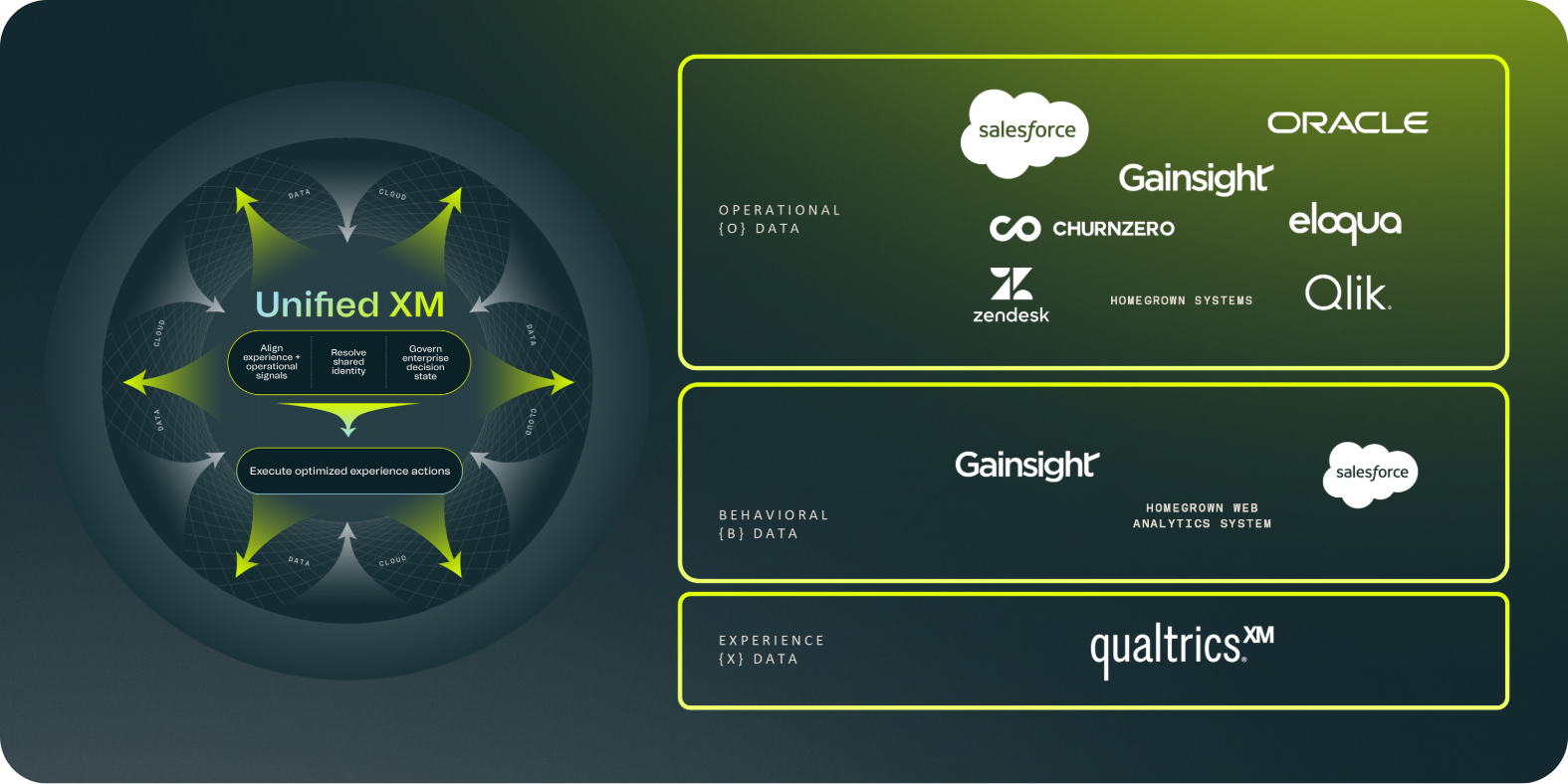
Churn Signal Detection sits at the foundation of what Walker calls Unified XM—connecting behavioral, operational and experience data in a client's own data cloud environment, then using that connection to solve real busines problems. Churn detection is one of the fastest use cases to prove out, and it's built to scale: start with a tightly scoped proof of concept, then expand the same architecture to new use cases and new data sources as trust builds.
This is how Walker approaches every churn engagement: start with the business question, not the technology architecture. Unify the data needed to answer it. Build a business case for what comes next.
The churn signal is already in your data. Find it—before the customer is gone.
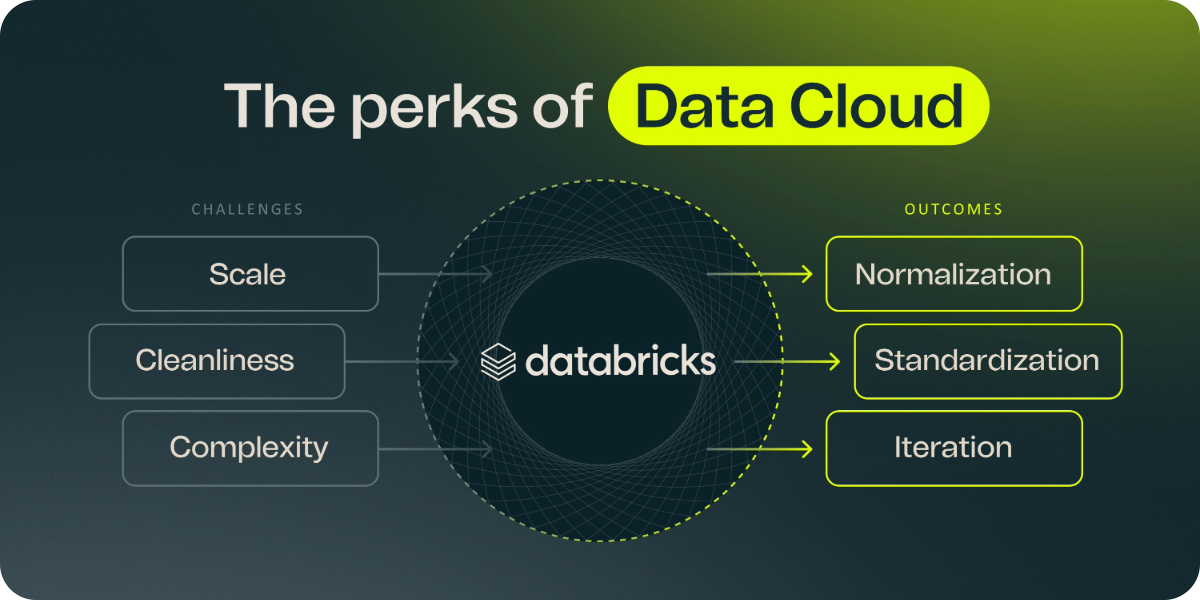
Demo: Unified XM + the data cloud for identifying revenue risk.

