Can your AI agent see your data—all of it? Most organizations have gaps.
•
3 minute read.

Key takeaways:
- Agents act only on what they can see. Missing data doesn't trigger a warning—it produces a confident wrong answer.
- Agents need three connected data types—experience, operational and behavioral—to know not just what customers do, but why. Most organizations keep them siloed.
- Clean, standardized data is the real foundation. "USA," "US" and "United States" can look like three different customers to an agent.
A regional leader wants to know which of their locations are falling behind on customer satisfaction—and why. An AI agent for CX could answer that question in seconds. But only if it has the right data to draw from.
Walker works with a customer that operates a global vehicle rental fleet—they faced exactly this situation. They had quality data, smart teams, dashboards everyone referenced. But their customer satisfaction data was built to report on—it didn't connect to any other systems or data. So the agent couldn’t see what customers were actually saying.
Without the full context, the agent returned the wrong answer. And the regional leader didn’t know that.
Agents are only as smart as what they can see.
AI agents are purpose-built to act. They don't get tired. They don't hesitate.
But agents work with what they have—and never question what they don't.
Key signals go missed. Agents return answers and take action based on incomplete information—and those answers drive real business decisions. What customers are actually saying never enters the picture.
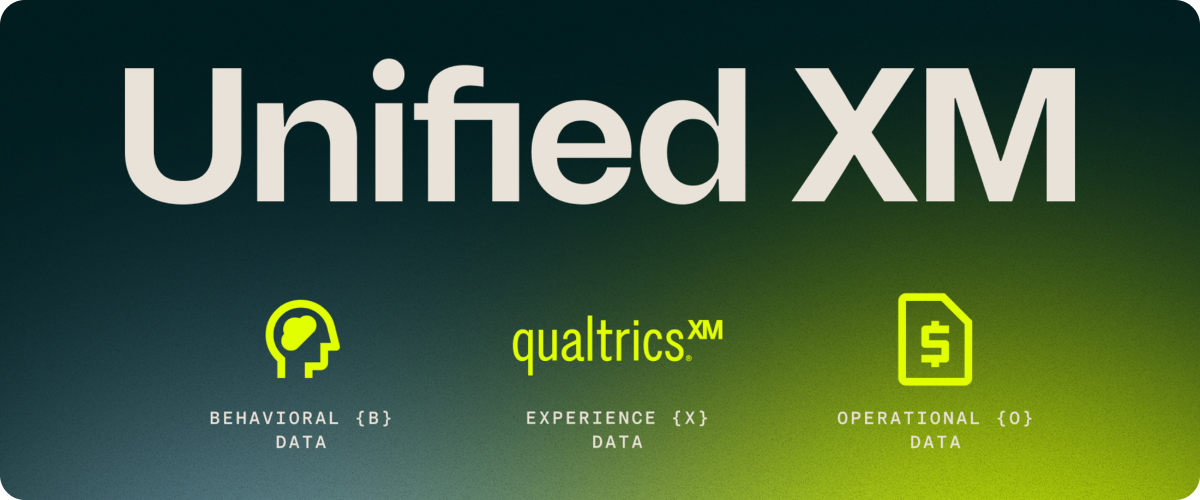
Agents need to draw from three types of customer data:
Experience data—survey responses, feedback signals, support calls, chat transcripts—what customers say.
Operational data—account information, revenue trends, contract status—what an organization knows about its customers on paper.
Behavioral data—product usage, support interactions, engagement patterns—what customers actually do.
Operational data tells an organization what you know about customers. Behavioral data shows what they are doing. Neither of them can explain why customers act the way they do—only experience data can.
Our customer had all three data types—but they lived in separate systems, unavailable to the agent.
We can create this complete, connected view—using an approach that we call Unified XM.
Behind every good agent is clean, compatible data.
Most organizations assume agents can connect any data—that isn't true. Missing records, incomplete fields and data without a unified standard all create gaps.
When Walker audited our customer's data, we found their client locations listed as "USA" in one system, "US" in a second and "United States" in a third. An agent would see these as three different customers. The same account—invisible across systems.
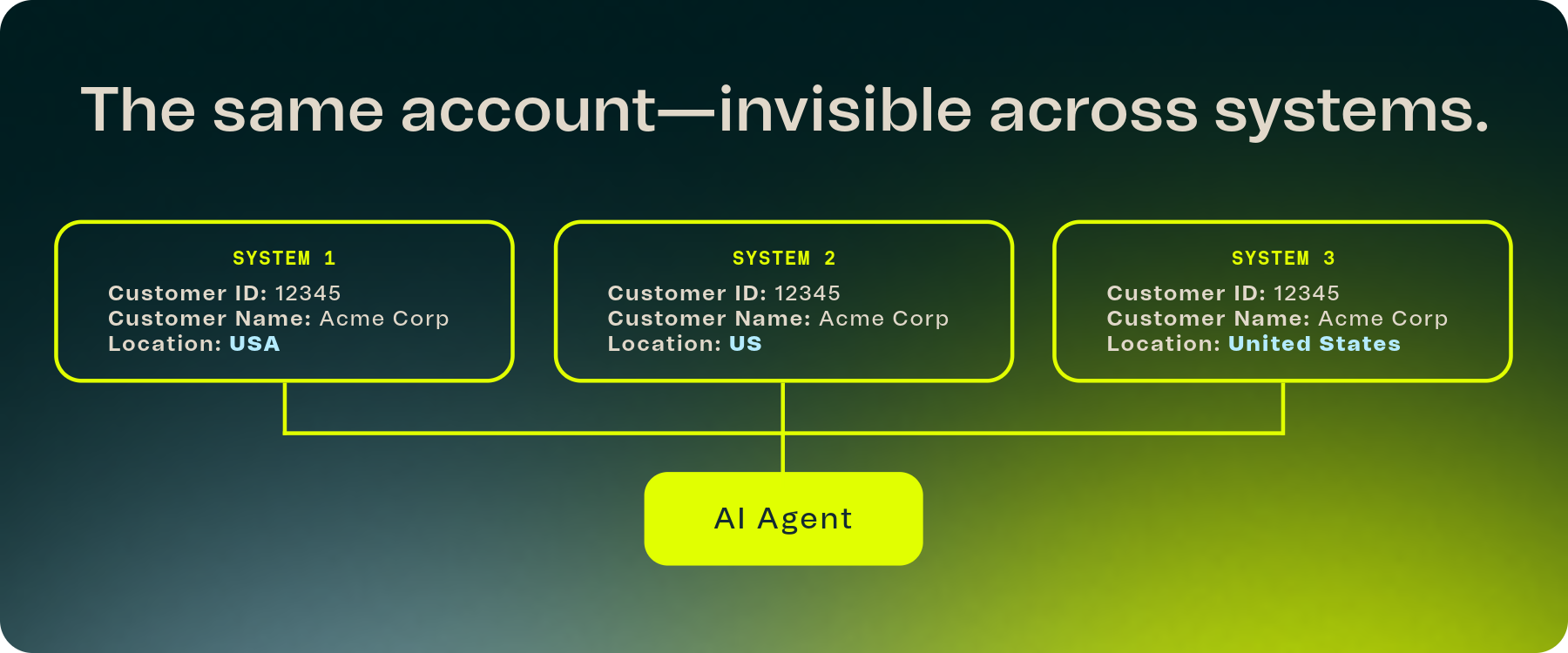
Multiply that across thousands of customers and dozens of fields. Agents can't function effectively from an inaccurate view of reality.
So Walker established data standards with our client, audited against them and resolved inconsistencies. Then we unified data sources in a warehouse. And built an agent powered by a clear source of truth.
What made the agent powerful wasn't the platform or the AI sitting on top of it. It was the foundation that Walker built beneath both.
Agent conversations are replacing dashboards.
Dashboards take time to build and time to interpret. They answer the questions someone thought to ask—and nothing else.
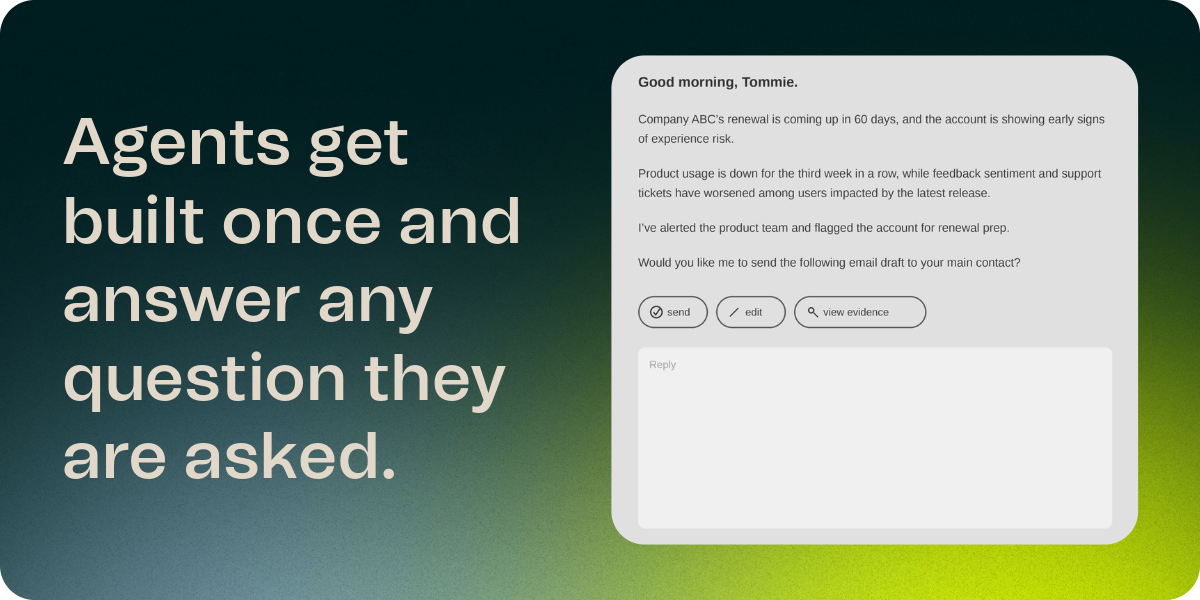
Any team member with access to the agent can query data in plain language. No dashboard to log into. No report to request. No analyst to wait on.
Questions like these now get answered in seconds:
Which locations are struggling the most right now?
What drove our most recent change in NPS?
Why is Location A outperforming Location B?
And the agent knows who's asking. A local store leader asking "What are customers saying about my location?" sees their data—not the entire company's. A regional leader asking the same question sees a broader picture across the locations they oversee.
There's no new interface to learn, no new tool to roll out. The agent connects directly to Claude or another AI tool teams already use.
Walker builds the foundation. And the agent on top of it.
AI agents act quickly. But those actions need to drive business impact.
To do both, agents need to understand the business. That means having access to all the right information—including experience data.
Many organizations will iterate and optimize their agents. The ones built on a connected foundation will move the needle. The ones built on gaps won't.
In an AI-powered world, speed isn't incremental. It's exponential. Walker builds powerful agents—on top of strong foundations.
We move quickly by getting it right the first time.

